Accessibility & Speaking
Brian has what he likes to call a unicorn background in accessibility. He is an assistive technology and inclusive design specialist who relies on that technology every hour of every day. He does not test on behalf of blind users. He is one.
Accessibility cannot be understood from documentation alone. It is not defined by guidelines. It is defined by whether real people can use your product. Brian has audited and advised on that question for more than a hundred companies, spent two years inside a major product organization doing it from the design side, trained blind users on the technology itself, spoken about it at conferences around the country, and lately started building accessible software of his own.
One person, several jobs
Multiple hats
You have probably noticed the tagline at the top of this page. It is not a mistake and it is not a different Brian Fischler. The man who works a comedy club and the man who sits in a design review are the same man, and the combination is the point rather than a contradiction to be explained away.
Around 2018, a counselor at the New York State Commission for the Blind told a client that his new assistive technology trainer would be Brian Fischler. The client’s response was: Brian Fischler, the comedian?
He was. He also taught the client. Call it being a Renaissance man in 2026 — an eclectic background that requires a number of hats, and a working life that has never fit neatly into one box.
The thing most people miss
Inside and outside
An automated audit can only catch so much. It finds missing alternative text and color contrast failures. It never once considers the thing that matters most, which is whether the product is usable.
Accessible and usable are not the same word. A product can satisfy every checkpoint on a list and still be miserable to actually operate. Finding that out requires real people who use these features around the clock, working through the major flows of the product. An auditor can identify a set of issues through automation. Nothing replaces a person with years of experience using the product having input on where it goes next.
What you learn on the inside
Brian learned inside a product organization how accessibility defects slip through the design process and ship in a general launch anyway. So he installed practices and methodologies to stop it happening, and Yahoo Fantasy and Yahoo Sports went on to an unblemished record of fully accessible builds for the duration of his time there.
His expertise is not as a coder. It is as a blind designer with the lived experience of someone who does not merely use the accessibility features but requires them to use the product at all. Being internal meant getting his hands on early designs and betas for upcoming releases, running them through a full set of manual testing, catching bugs in real time and getting fixes implemented before anything shipped. That saved money and it earned the company a reputation as an organization that takes this seriously.
What an outside auditor cannot reach
An outside auditor can be genuinely helpful and can fix real problems. What that auditor will never get is full trust and full exposure — to the designs, the fixes, and especially the new features sitting behind the corporate wall. There is a great deal of secrecy and mistrust in technology, and engineers are understandably careful about outside contractors having access to their code.
Being a full-time member of the design team changes that completely. The designers, developers and engineers know you as a person. They trust you. They can reach out mid-build and get an answer the same day.
Artificial intelligence has widened that gap further. Someone in Brian’s position can now take live code from the development team, run it in simulators for iOS, web and Android, and return specific accessibility feedback in under twenty-four hours. No external auditor can do that, because the access simply is not granted.
Inside, everyone is on the same team working toward the same thing: a launch that goes well.
What it costs
A company can spend well over a million dollars on an external contract and get less than it would from one experienced person on the payroll who is in the room. Fixing accessibility at the design stage is always cheaper than retrofitting it after engineering, QA, legal review, customer complaints, legal action and public embarrassment. This is what shifting left actually means, and why it is a product strategy rather than a testing task.
Consulting and audits
The work
Brian has consulted with and advised more than a hundred companies, from mom-and-pop operations to the Fortune 500, on accessibility best practices, on building accessible design into the design process, and on why doing it early is not charity but good business that saves money.
Much of that work sits under non-disclosure agreements and cannot be named here. Among the clients that can be: Yahoo, Bleacher Report, Stop N Shop, and Sports Scores and Alerts from Luna Software. The rest spans retail, entertainment, travel, sports and media.
Standards
- WCAG 2.1 and 2.2
- ARIA
- The Americans with Disabilities Act
- Section 508
- The European Accessibility Act
Assistive technology
- VoiceOver, on iOS and macOS
- TalkBack
- NVDA
- JAWS
- ZoomText
- Braille displays
How the testing is done
Fully manual, emphasizing real screen reader interaction, task completion and usability rather than automated checks. Desktop web, mobile web, and native mobile applications. Moderated and unmoderated user testing with disabled participants, so that real feedback reaches the product decisions rather than stopping at a report.
2021 to 2026
Yahoo, from the outside in
Brian’s relationship with Yahoo ran for five years and moved through every position it is possible to hold: subject, vendor, contractor, and finally a member of staff.
2021 — in front of the camera
Yahoo hired Brian to executive produce and star in a mini-documentary about the All Blind Fantasy Football League. He was not an employee or a consultant at that point. He was the story. It passed a million views and is still featured on Yahoo’s accessibility site. The year before that, Yahoo Sports ran a profile of Brian and the league.
- The film on YouTube
- Yahoo’s accessibility site
- Yahoo’s announcement, November 2021
- Yahoo Sports profile, 2020
2022 to 2024 — approved vendor
An external accessibility consultant on Yahoo’s approved list, working with Yahoo Fantasy Sports, Yahoo Sports and selected platform products. High-level testing of the Fantasy iOS applications focused on real VoiceOver usability. Recruiting and coordinating teams of blind VoiceOver users for structured testing cycles. Remediation across fantasy football, fantasy baseball and tournament games, and the work behind Yahoo’s first fully screen-reader-accessible sports box scores — which meant that for the first time a blind fan could get live game data independently. Also a remediation effort on a third-party platform, with designers and engineers across three continents.
2024 to 2025 — full-time contractor
Accessibility and UX research for Yahoo Sports and Yahoo Fantasy Sports. This is where the shift left transformation happened: moving accessibility out of post-launch cleanup and into the design process. Ownership of issue identification, documentation, prioritization and tracking, working directly with engineering on remediation.
2025 to 2026 — on staff
Assistive Technology and Inclusive Design Specialist, supporting Yahoo Sports and Yahoo Fantasy Sports through product updates and new feature launches, embedding inclusive design into planning, design review and pre-launch validation.
Two of those launches were substantial new styles of fantasy gameplay. Brian oversaw accessibility strategy, testing and release readiness for 28 Days of Fantasy, which launched with no critical accessibility issues, and did hands-on testing and design collaboration for Guillotine Leagues, which was fully accessible on day one. That work contributed to Yahoo becoming the most played fantasy application and the only fully accessible one in the industry, and the broader product team went on to receive a Cleo Award for design excellence.
He later moved into a cross-product role, conducting advanced screen reader testing and accessibility analysis across Yahoo Mail, Finance, Weather, Shopping and platform products.
Commissioner
The all-blind leagues
Brian is the commissioner of the All Blind Fantasy Football League, now heading into its eleventh season. When Yahoo filmed the documentary, he told a reporter that people were already asking him to start a second league, but that he had to stop somewhere.
He did not stop. Interest after the film was such that there are now four of them: the original league, the All Blind Fantasy Football League Two, the All Blind Guillotine League entering its second year, and the All Blind College Fantasy Football League launching in 2026. He commissions all four.
All of them run on Yahoo Fantasy, which remains the only fully accessible fantasy gameplay available to players with disabilities. There is a neat symmetry in the guillotine league in particular: Brian did the accessibility work that made that format usable with a screen reader, and then went and started a league to play it in.
Writing
Accessibility is the biggest missed opportunity in sports
Sports, fantasy sports and sports betting have historically treated accessibility as optional when it is business critical. The disability market is not niche, the lawsuits have not stopped, Europe has raised the floor with the European Accessibility Act, and companies chasing global audiences are about to discover that global audiences include disabled people. Brian has watched this from both sides of the wall and wrote it up.
What he is doing now
Screw it, I will build it myself
After twenty years of telling companies what an accessible product looks like, Brian started making them. If you build it, they will come.
The tools are Swift and Xcode for iOS, HTML for the web, and Terminal, GitHub and Cloudflare to hold it all together. The part that actually changed things is artificial intelligence: every one of these is built with Claude, working from careful instructions about security, privacy and beta testing. A blind designer who is not a career coder can now ship real software, which is precisely the argument he has been making about AI from conference stages.
Out now
- That Real Movie Quiz — more than 20,000 questions, over 800 categories, solo and buzz-in play. On the iOS App Store, $3.99.
- The That Real Blind Tech Show app — the podcast’s official iOS app, built VoiceOver-first. Free on the App Store.
In progress
- That Real Baseball SIM — the first fully accessible baseball simulation. In beta on web and iOS.
- That Real Football SIM — the same idea applied to football. In development.
- That Real Presidents Quiz — trivia in the same format as the movie quiz. In development, headed for the App Store.
- That Real American History Quiz — in development, headed for the App Store.
There are roughly forty more ideas behind those, which will stay unannounced for now.
For other comedians
Brian can build iOS apps for other comedians. If that is of interest, get in touch and ask.
Testing
Testing on any of these projects is available on a limited basis. iOS testing runs through TestFlight, and web testing is arranged by email.
Speaking
On stage at conferences
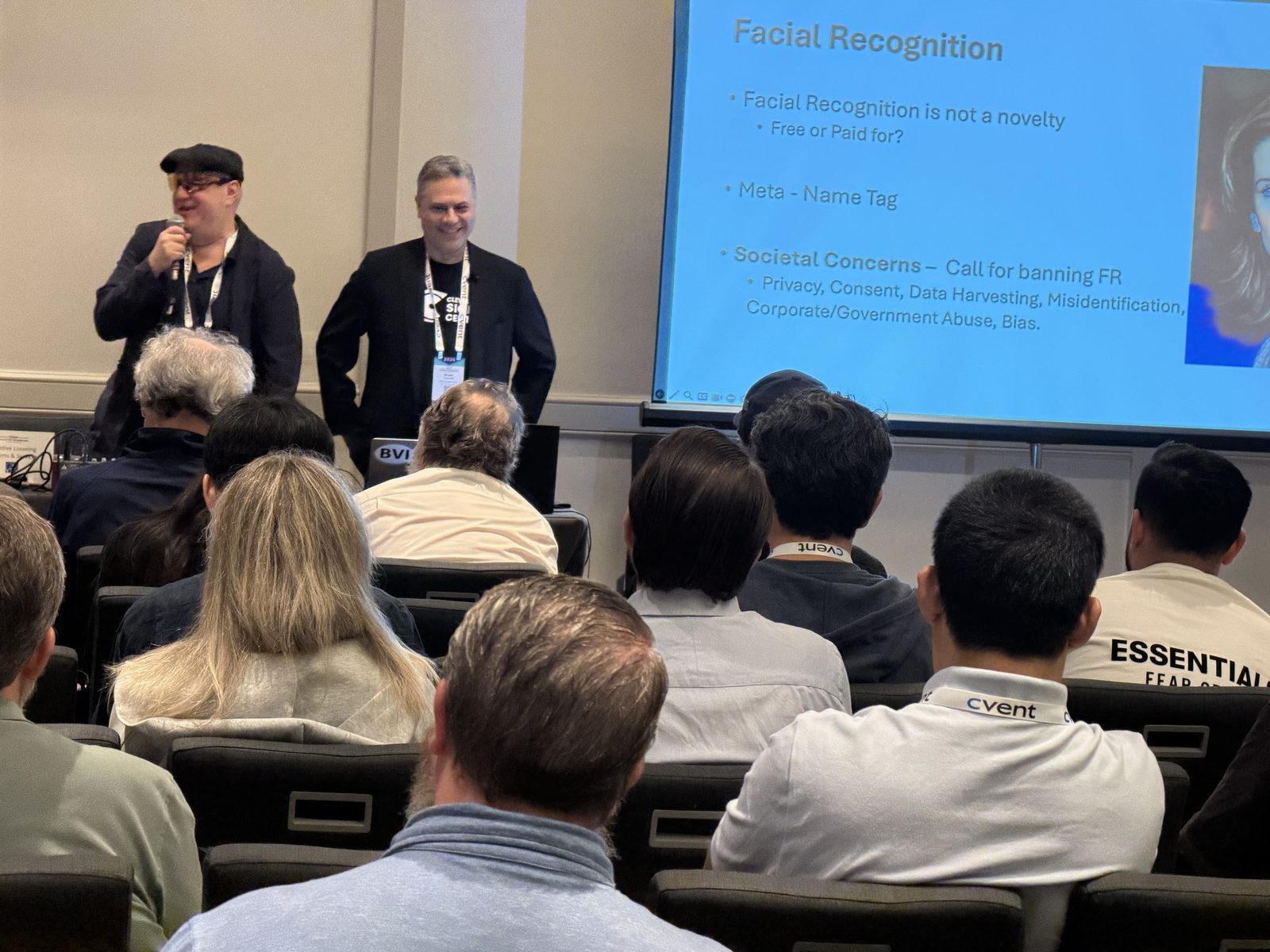
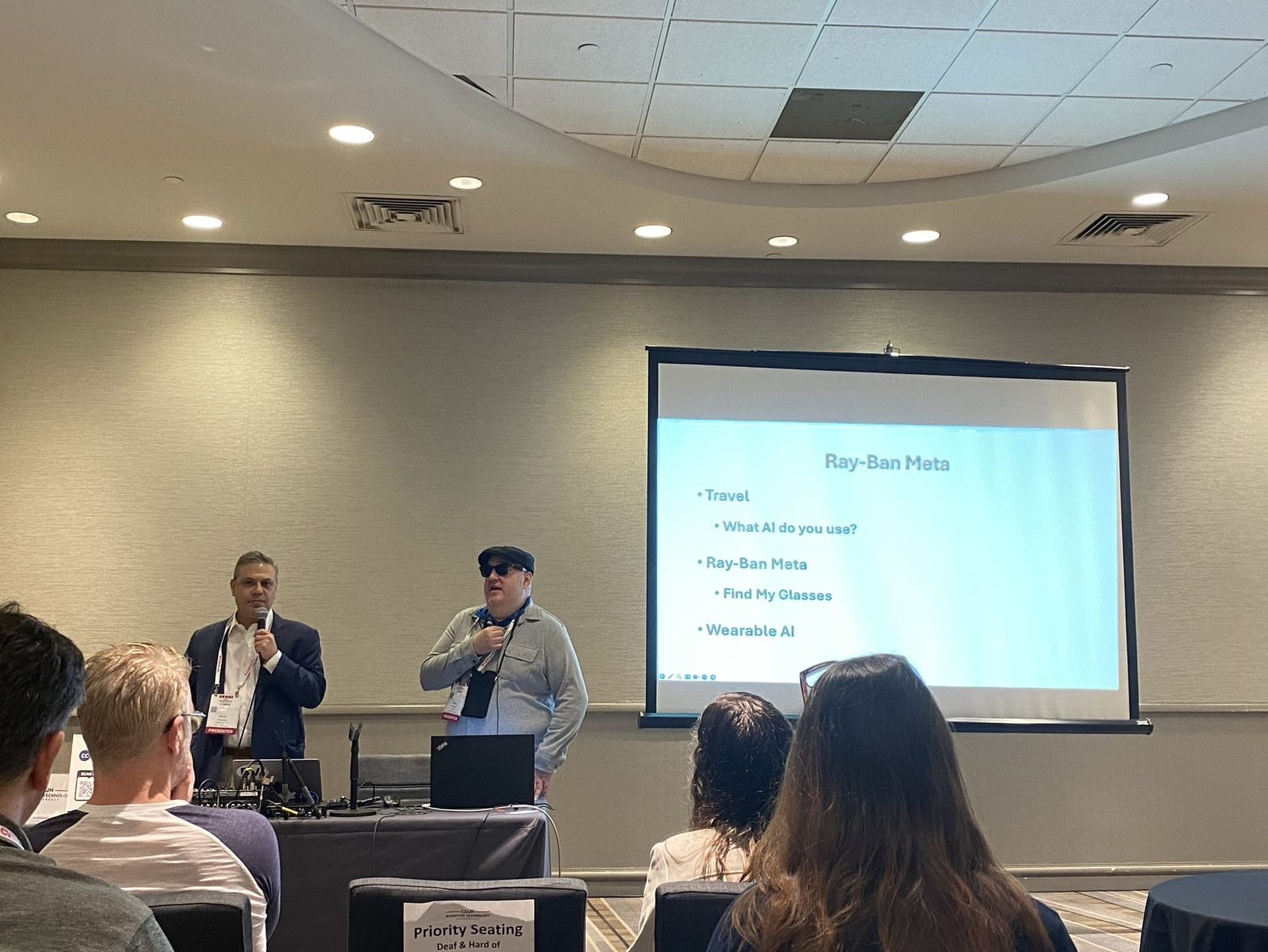
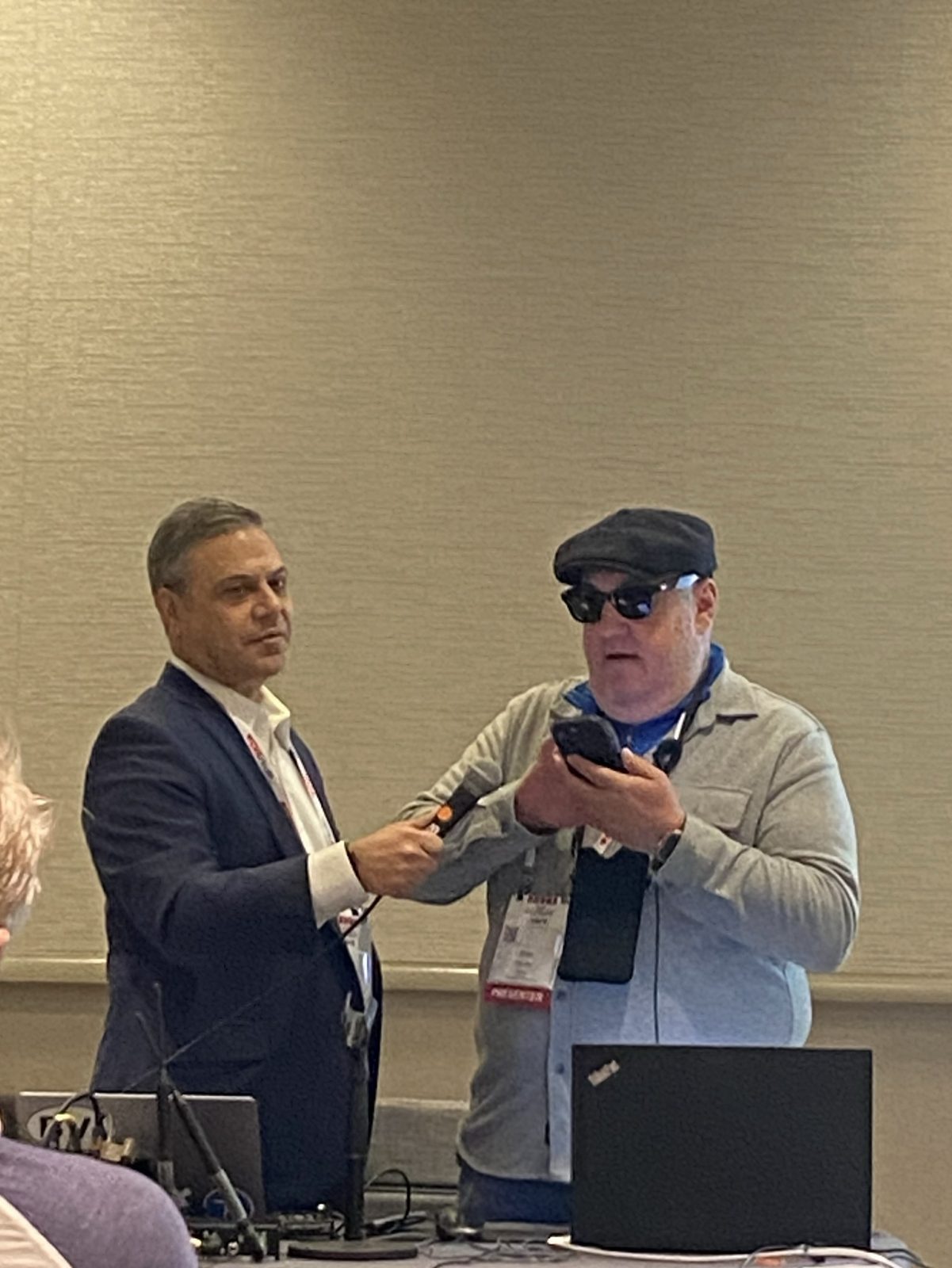
Brian speaks at technology and accessibility conferences on artificial intelligence, assistive technology and inclusive design. His signature talk is Artificial Intelligence: In and On Your Face, on wearable computer vision and where AI is taking assistive technology next.
Where he has spoken
- CSUN Assistive Technology Conference — presenter, 2026 and 2025
- M-Enabling Summit — presenter, 2025
- CVPR, VizWiz Grand Challenge Workshop — presenter and panelist, 2024
- Sight Tech Global — host, 2022
- Sight Tech Global — panelist, 2021
- axe-con — presenter, 2022
Topics
- Artificial intelligence and assistive technology
- Real-world AI use by people with disabilities
- Wearable computer vision
- Accessible and assistive extended reality
- Getting product accessibility right, and knowing when you have
- Accessibility in sports, fantasy sports and sports media
- Building accessible software with AI as a blind developer
Two minutes from CSUN 2025
Brian and Bryan Wolynski demonstrating what happens when you ask an AI app which celebrity a blind man resembles. Captions are on by default.
Sight Tech Global
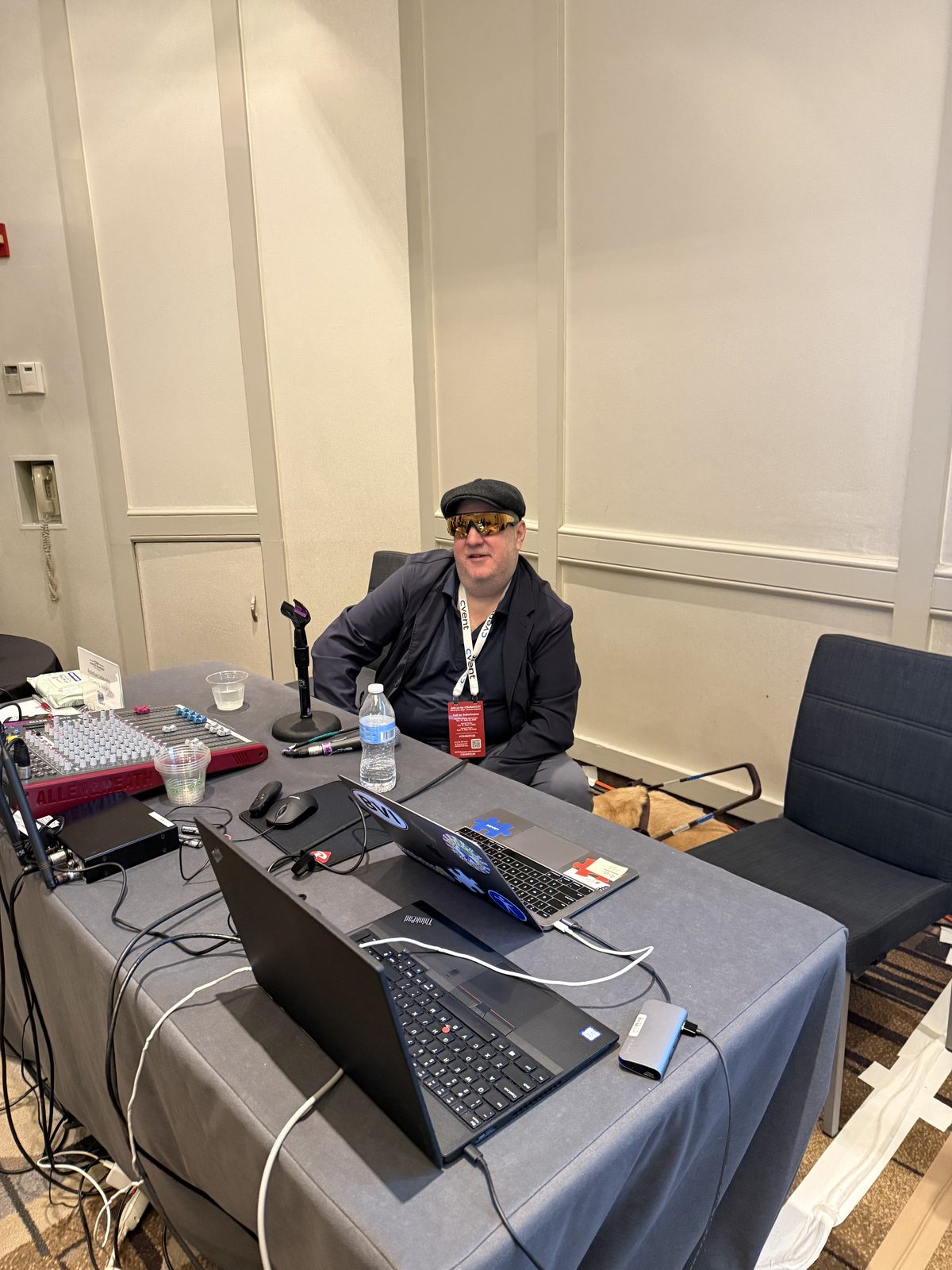
Brian hosted in 2022, and in 2021 sat on the panel Product Accessibility: How Do You Get It Right, and How Do You Know When You Have?
Conference organizers are welcome to inquire about rates.
Get in touch
Consulting, speaking, and everything else
Accessibility consulting and audits, training, conference speaking, app development, or beta testing on any of the projects above — Brian@LaughForSight.com.
He is also on LinkedIn, and a full resume is available on request.